Last updated 2026-08-18
TL;DR
Custom exempt slaughter in Arkansas does not require a USDA license. You register with the Arkansas Department of Agriculture, Livestock and Poultry Division as a custom exempt slaughter plant. The fee is small (about $25, confirm the current amount). Kill fees run around $100 for a beef animal, plus processing. Expect a 2 to 6 week wait, longer in fall. Here is the exact paperwork and what to budget.
Do you need a license for custom exempt slaughter in Arkansas?
No federal license is required. The USDA exempts custom slaughter from continuous inspection under 9 CFR 303.1(a) [1]. What Arkansas requires instead is a state permit. Arkansas Code § 20-60-210 puts it plainly: "No person shall operate a custom slaughter plant without first obtaining a permit from the Director." [2]
That permit is a custom exempt slaughter plant registration from the Arkansas Department of Agriculture, Livestock and Poultry Division. The division issues it after you send in an application and pay a fee. There is no federal paperwork for the exemption itself. The state registration is the only government permission you need to run a custom exempt plant here.
What is custom exempt slaughter?
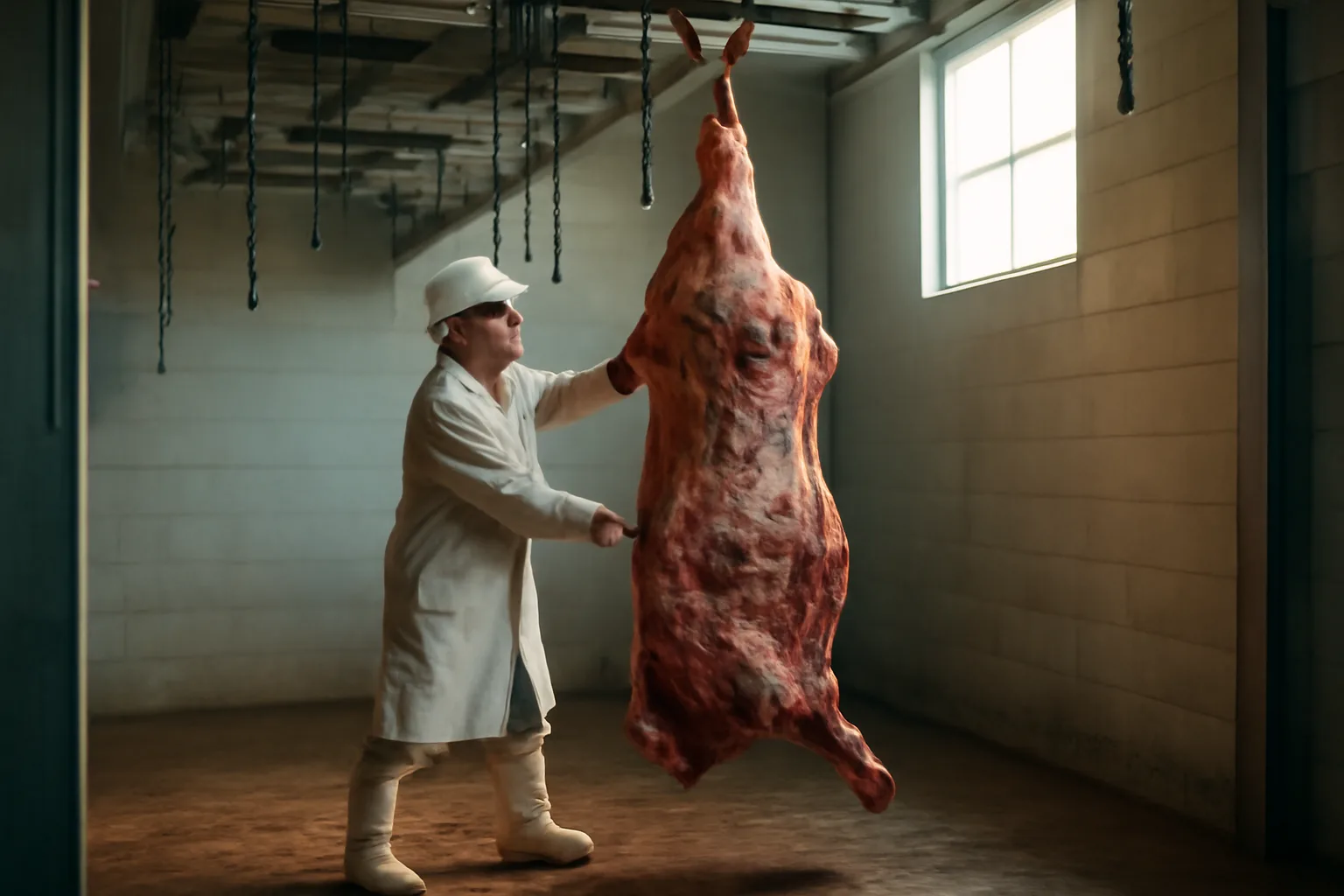
Custom exempt slaughter is processing an animal for its owner's own use, never for sale. The owner brings the live animal to the plant. The processor returns packaged meat stamped "Not for Sale." [1]
This kind of slaughter skips continuous USDA inspection because the meat never enters commerce. The exemption is federal (9 CFR 303.1(a)), but states like Arkansas can still require registration and set sanitation rules. The plant cannot sell any of the meat or hand it to anyone but the animal's owner. That single rule holds the whole model together.
How do you register as a custom exempt plant in Arkansas?
You file an application with the Arkansas Department of Agriculture, Livestock and Poultry Division. The form you want is the Custom Exempt Slaughter Plant Registration. It asks for the plant's physical address, owner information, and a description of the facility. [3] [4]
You send the fee with it. Under the department's fee schedule, the fee is $25. Confirm the exact amount before you mail the check, because fees change with the fiscal year. [6]
The division reviews the application and may inspect the premises before it issues the permit. The permit renews annually. Your plant has to meet basic sanitation and construction standards, and the division gives you a checklist for those. There is no USDA grant of inspection and no federal mark of inspection to chase.
How much does custom exempt slaughter cost in Arkansas?
The cost to the animal owner swings with the plant, the animal type, and the cuts you ask for. A 2021 national survey of custom processors gives a working baseline. [5]
For a beef animal, the kill fee averaged $100, ranging from $50 to $200. Cut-and-wrap added roughly $0.70 per pound of hanging weight. Run the math on a 1,000-pound steer with a 600-pound hanging weight and you land near $520 ($100 kill plus $420 processing). Hog kill fees averaged $50, with processing near $0.60 per pound. Lamb kill fees ran about $40, with similar per-pound rates.
No Arkansas-specific survey exists. The national numbers track close to what producers in the region report. Call a few plants near you. Prices can move 20% or more depending on the plant's volume and any special services.
| Animal | Average kill fee | Typical processing (per lb hanging weight) |
|---|---|---|
| Beef | $100 | $0.70 |
| Pork | $50 | $0.60 |
| Lamb | $40 | $0.65 |
Source: NMPAN Custom Slaughter & Processing Fees Survey, 2021 [5]
How long does custom exempt slaughter take in Arkansas?
Wait times run with the season. In spring and summer, a beef animal might move through in 2 to 3 weeks. Come fall, when deer season and holiday cattle both hit, that same plant can sit on a 6 to 12 week backlog.
Plenty of plants book months out. Want a specific date? Call early. A plant that kills 10 beef a week can have a full cattle list by August. The kill and initial chill take 1 to 2 days. Cut-and-wrap and freezing add another 3 to 7 days. The real bottleneck is the kill slot, not the processing.
No government body tracks average wait times. Every extension agent tells you the same thing: plan ahead and confirm in writing. A phone call in March for an October steer is not too early.
What animals can you slaughter under custom exempt?
The federal exemption covers cattle, swine, sheep, goats, and domestic poultry (if you also meet the poultry exemption in 9 CFR 381.10). Wild game, meaning deer, elk, and feral hogs, cannot go through the custom exemption unless the plant holds a separate wild game processing permit from the state.
Arkansas allows custom slaughter of farm-raised game like domestic bison or farmed deer when the owner raises them, and the animal has to arrive at the plant alive. The test is simple: the animal is for the owner's personal use, not for sale. Want to sell meat? You need a different facility type, USDA-inspected or state-inspected. [1] [2]
What are the labeling and recordkeeping requirements?
Every package from a custom exempt plant has to read "Not for Sale" in letters at least ⅜ inch tall. The label also carries the name of the animal's owner, the product name, and the plant's information. [1]
Records stay on file for one year: the slaughter date, the owner's name and address, the number and type of animals, and where the meat went. Arkansas may ask for more, and the registration application spells that out. The state's division can inspect these records.
No USDA mark of inspection applies here. The "Not for Sale" stamp is the line you do not cross. Lose a package or mislabel one, and the state can pull your registration.
What about selling the meat?
You cannot sell any meat from a custom exempt plant. Not one package. The meat belongs to whoever owned the animal before slaughter. That owner can give it away but cannot sell it. Sell the meat and you are running an unlicensed meat business, exposed to both federal and state penalties.
To sell meat, you run a USDA-inspected or state-inspected establishment. Arkansas operates a state meat inspection program that federal law treats as "at least equal to" federal inspection. You apply for a state grant of inspection through the same division. That road needs a HACCP plan, a sanitation plan, and ongoing inspection. It is a different business.
How does custom exempt compare to USDA-inspected or state-inspected?
Custom exempt is the simplest path. You register with the state, pay a small fee, and process only for the animal's owner. No resident inspector, no HACCP plan, no daily government sanitation checks. The tradeoff is zero sales. You charge a service fee for slaughter and processing, never a per-pound price for the meat.
State-inspected and USDA-inspected plants can sell meat. They carry a grant of inspection, a written HACCP plan, and a full-time inspector on the floor. Startup costs run higher, and the regulatory load is real and constant. Many small processors open custom exempt, then decide later whether to move up. For a farm that wants to fill its own freezer, custom exempt is the right fit.
What are the next steps?
Call the Arkansas Department of Agriculture, Livestock and Poultry Division at (501) 225-1598. Ask for the current custom exempt registration packet. Confirm the fee, the application, and any facility checklist. The division's website has the form, but the phone call saves you weeks of guessing. [3]
Next, draft a simple floor plan. Make sure you have hot water, a separate hand wash sink, a drain that meets local plumbing codes, and a way to refrigerate carcasses. The state checks these basics.
Want a guided walkthrough of the whole registration path? The CustomExemptPath $249 Kit includes the Arkansas-specific form, a checklist of what the division expects, and a template for the required records. It is a one-time purchase, not a subscription. That kit has cut paperwork time for a lot of first-time operators.
Read the guides for other states to see how the process shifts: custom exempt slaughter in Alabama, custom exempt slaughter in California, custom exempt slaughter in Colorado, custom exempt slaughter in Florida, custom exempt slaughter in Georgia, custom exempt slaughter in Illinois.
Frequently asked questions
Do I need a USDA inspector for custom exempt slaughter in Arkansas?
No. The custom exemption lets you operate without a federal inspector. The state may inspect your facility once when you register, but there is no daily or continuous inspection. Running a sanitary operation is on you. That single freedom is the whole point of the custom exempt model.
Can I process wild game in a custom exempt plant in Arkansas?
Not under the custom exemption alone. You need a separate wild game processing permit from the Arkansas Department of Agriculture. Wild game cannot mix with custom exempt livestock. Many plants hold both permits, but the two are distinct and you have to apply for each one.
How much does the Arkansas custom exempt registration cost?
The fee is $25 under the department's fee schedule. Confirm the exact amount with the division before submitting, because fees can change each fiscal year. There is no separate federal fee for the exemption itself, so the state registration is your only government cost.
Can I sell the meat from a custom exempt plant?
No. Every package reads "Not for Sale." The meat belongs to the person who owned the animal. Sell any of it and you violate federal and state law and can lose your registration. If selling is the goal, you need a USDA-inspected or state-inspected plant instead.
How long does it take to get the custom exempt permit in Arkansas?
Once you send a complete application and fee, the department typically processes it in 2 to 4 weeks. If an on-site inspection is required, add 1 to 2 weeks depending on the inspector's schedule. Plan on about a month from mailing to holding the permit.
What are the facility requirements for a custom exempt slaughter plant in Arkansas?
You need a structure you can clean and sanitize: hot water, a separate hand wash sink, a floor drain, and enough refrigeration for carcasses. The exact list comes from the division, which hands you a checklist with the application packet. Build to that checklist and you will pass the initial look.
Can I do custom exempt slaughter on my own farm?
Yes, if the facility meets the state's requirements. You cannot slaughter an animal in the field and call it custom exempt. You need a registered plant. Mobile slaughter units are allowed, but they still have to be registered as a plant with the division.
Do I need a business license for a custom exempt slaughter plant in Arkansas?
The state registration is your primary permit. You may still need a local business license from your city or county, so check with your local clerk. The state registration does not replace local zoning approval or business tax requirements. Handle both before you open.
How do I find a custom exempt slaughter plant near me in Arkansas?
The Arkansas Department of Agriculture keeps a list of registered custom exempt plants. Request it from the division. Many plants also show up on the department's website or through local extension offices, which often know the closest ones and their current wait times.
Is custom exempt slaughter cheaper than USDA-inspected processing?
The service fees are often similar for the same animal and cuts. The savings show up in lower regulatory overhead for the plant owner, not in a lower per-animal service price. As a customer, expect roughly the same kill fee and processing rates you would pay a state-inspected plant.
Can I slaughter poultry under custom exempt?
Yes, but you also have to meet the poultry exemption under 9 CFR 381.10. Arkansas may require an added registration or fee. Poultry brings more water and waste to manage. Confirm the details with the division before you add birds to a plant built for red meat.
What records must a custom exempt plant keep in Arkansas?
Keep records for one year: the owner's name and address, the slaughter date, the species, and the number of animals. The format is flexible, but the state checks these during inspections. The CustomExemptPath kit includes a template that meets the requirement so you are not building one from scratch.
Sources
- 9 CFR 303.1(a): The federal custom slaughter exemption is found at 9 CFR 303.1(a).
- Arkansas Code § 20-60-210: Arkansas law requires a permit for custom slaughter plants.
- Arkansas Department of Agriculture, Livestock and Poultry Division: The state division that administers custom exempt registration in Arkansas.
- 9 CFR 381.10: The federal poultry producer/grower exemption criteria.
- NMPAN Custom Slaughter & Processing Fees Survey, 2021: National survey data on kill fees and processing costs.
- Arkansas Department of Agriculture: The department that publishes the custom exempt registration fee schedule.